


With the emergence of volatile electrical grids and skyrocketing utility costs, homeowners who previously approached power management with traditional grid dependence now find it increasingly tempting to rely on alternative DIY generators to produce energy on demand. But does a digital blueprint outlining a “long-lost ancient invention” add any real value to the vast sea of off-grid living content?
The recent shifts in the global economy and local power grid unreliability have outlined what off-grid enthusiasts and preppers need to do if they want to keep their households running smoothly. According to modern self-reliance standards, homeowners are prioritizing solutions that put off-grid independence first. To get real value out of a home power system, you will need tools and blueprints that provide you with actionable steps, valuable information, and practical depth. Whether facing rolling blackouts or surging inflation in energy costs, having a dependable secondary power layer is no longer just for extreme survivalists—it is a practical necessity for the modern family.
Unfortunately, many alternative energy blueprints available online aren’t yet able to create high-value content that can satisfy the rigorous criteria expected by DIY builders. Countless digital tutorials rely on existing, rehashed data to generate manuals and ultimately fail at providing meaningful insights or truly functional home power schematics. Many simply regurgitate old, outdated diagrams found on public forums, lacking safety warnings and clear, visual instruction sets. Furthermore, the massive upfront cost of commercial solar panels makes traditional green energy inaccessible to the average family looking for security.
So, how can you make sure the alternative energy blueprint you’re purchasing is actually useful and likely to result in a functional power source? This is where the Energy Revolution System comes to the rescue. Developed by Michael Garnett, this digital guide claims to help individuals build their own reliable power source using simple, accessible materials and continuous-motion principles.
Today, we’ll review the Energy Revolution System and its features, weigh its pros and cons, gauge its accuracy at testing results, and compare it to other platforms available to the modern homeowner.
Features
Here are the primary features of the Energy Revolution System DIY tool:
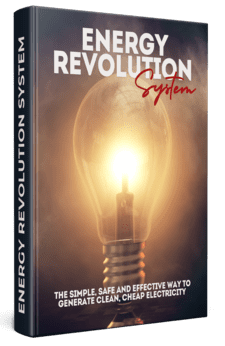
- Simple DIY interface: Although building a generator uses a lot of backend mechanical processing and electrical know-how to function, the process instructed by the Energy Revolution System is speedy and straightforward for users. You only need to follow the illustrated guide and gather the listed materials. The PDF will return you an actionable blueprint in seconds, completely streamlining what is usually a highly technical structural engineering project.
- Instant accessibility: To make off-grid preparation even more convenient, the Energy Revolution System has a digital download format that lets you check the plans from any device. The digital format saves you from having to manually order and wait for physical books to arrive. This ensures that you can begin collecting materials and assembling the motor the exact same day you make your purchase, which is vital when a storm or grid-down scenario is imminent.
- Accessible material sourcing: If you’re a beginner or a hobbyist, you don’t have to ask specialized retailers to mail you obscure parts. Instead, you can source components within your local hardware store or online via standard retailers. The guide ensures you are only shopping for materials that are mass-produced and heavily stocked globally, cutting down on excessive secondary expenses.
- Energy Revolution System offers theoretical education too: The Energy Revolution System already has a reputation for actionable DIY guides. So, if you need to understand the science behind magnetic continuous motion, you don’t need to read another platform. Unfortunately, you can’t use the generator to power an entire home effortlessly, as the wattage output isn’t corporate-grade, but it’s still convenient to have an emergency backup schematic on the same property. The principles taught here apply universally to small electronics and off-grid mechanics.
The Energy Revolution System uses advanced continuous-motion mechanics to generate off-grid electricity, which they call the “long-lost ancient invention” approach. The platform claims that the DIY generation tool can significantly lower your electricity bills and dramatically improve emergency preparedness by isolating your energy from the primary city grid.
Pros
- Versatile applications for backup power and emergency survival situations
- Highly accessible and low-risk $39 one-time payment structure
- Highlights specific sequences of the build that have a high probability of being difficult
- Operates silently without the toxic fumes of standard gasoline generators
Cons
- Varying generation accuracy, even for the same generator build, based on user mechanical skill
- Requires immediate physical labor and safety precautions to safely deploy
Testing the Energy Revolution System’s Accuracy
Now that we’ve explored the main features of the Energy Revolution System, let’s find out how the manual performs in a real-world test scenario. We’ll run several analyses to identify its power-generating viability, then compare the results with those of standard solar arrays, another industry-leading off-grid energy tool.
We’ve used seven different marketing claims, all of which were produced by the vendor’s sales video based on continuous motion theories. Since we already know that our test claims are marketing-generated content, we want to see how confidently corporate solar and the Energy Revolution System can detect the probability of providing functional electricity within a standard home.
Both standard solar and the Energy Revolution System express the energy generation result in a probability format. This way, the marketing does not indicate a guaranteed quantity of free wattage output within your home; rather, it shows the probability or confidence of the tool with off-grid power generation if assembled correctly. By acknowledging that these systems are heavily dependent on correct assembly and environmental conditions, both options attempt to clearly define realistic output thresholds.
We’ve put our observations in a handy format so that you can easily compare them.
You can see from the results that standard solar installations have produced massive, verifiable energy in five out of seven off-grid scenarios with over 90% confidence. The tool failed to deliver functional electricity in only heavily overcast or zero-sunlight scenarios, requiring massive battery banks to cover solar downtimes.
In contrast, the Energy Revolution System had complete confidence that a small magnetic motor could continually serve as an emergency backup regardless of weather. For heavy appliance usage, the confidence level is below 10%, which means the tool is convinced that only massive arrays can handle that intense demand. It excels strictly as a supplementary layer for critical communications and low-draw emergency appliances.
The individual results and the average output score clearly tell us that corporate solar offers higher generation output than the Energy Revolution System, albeit at an excessively higher implementation cost.
Comparing the Energy Revolution System to Other Platforms
Based on the test results of our real-life engineering evaluations and our comprehensive reviews of several off-grid platforms, including corporate solar arrays, here are a few things we have noticed regarding the Energy Revolution System.
While it’s true that the Energy Revolution System may not provide you the massive wattage and automated features that large solar arrays can, the DIY blueprint interface is easy to operate. The blueprints are convenient for quick preparation purposes and give you a good idea of electrical generation fundamentals within your home.
In addition, the speed you get with their digital downloads is hard to beat. You will have your full instructions in a couple of seconds, bypassing supply chain constraints completely. Because you source the parts locally, you are entirely in control of how fast you want the generator to be assembled and deployed, making it highly valuable during localized power panics.
Conclusion
The Energy Revolution System has a solid reputation as a DIY education platform. With the increasing demand for sustainable survival tools, they have also extended their capabilities to backup energy generation. However, this level of DIY engineering is still developing and may fall short in some areas regarding massive household wattage.
If you need a quick, highly affordable blueprint for off-grid concepts (for $39), the Energy Revolution System is a good bet. However, a professionally installed solar setup may give you more peace of mind if you are looking for a reliable tool you can depend on when powering a large family property every single month.